


Editor’s Note: The blockchain is a tough thing to explain. From Bitcoin to Axie Infinity, to online scams that the general public may not understand fully, there’s a chasm between signal to noise and Tin Erispe does her best to explain what Web3 and the blockchain is, and why it matters.
The Philippine blockchain scene didn’t start with whitepapers or funding rounds. It started with a frenzy of coin offerings, stories of people buying their dream house with mid-tier gaming skills, and a few JPEGs of apes. Lots of apes.
Which is funny, when you think about it. Because blockchain is probably the least intuitive technology we’ve ever adopted en masse.
Gaming? Makes sense. Press buttons, get points. Win something, lose something. You see the feedback loop immediately. It’s fun.
AI? Also easy to grasp. You type, it replies. Use it for writing, for drawing, for sounding smarter in email. It’s useful.
But blockchain? You sign something, and then… nothing visibly happens that you can’t already do with a regular app. If you’re more informed, you know that something is happening somewhere on a network you can’t see, verified by people you’ll never meet. It’s confusing.
And yet, here we are, one of the countries with the highest crypto adoption rates in the world.
Somewhere between sob stories of students who became Axie Infinity millionaires and the last Discord community financial scams, groups began to form. Not necessarily groups who understood the underlying tech, but ones who used it anyway.
The story of blockchain in the Philippines is not linear. It’s messy and loud. It’s equal parts magic internet money, 100x profit screenshots, and a bunch of developers deploying NFTs and tokens using the same templated code over and over again. It was (and still is) an echo chamber that no one can ever pierce. As they say, “We’re All Gonna Make It.” Or WAGMI: The cry of belief but also of desperation.
Not everything exploded on our faces right away. Some of it even… worked.
We didn’t come here for the tech, and that’s okay
Filipinos didn’t get into Web3 because they wanted to decentralize power structures. They came in during the pandemic, when someone whispered WAGMI and handed them a link to a game where you could maybe pay the bills by breeding cartoon pets.
But it was a remittance. A chance to earn. It wasn’t about peer-to-peer or revolutionizing gaming. It was the gig economy in Pokémon skins.
And maybe some of it was ponzinomics wrapped in pastel and somewhat innocent game graphics. But still something happened. They made a wallet. Clicked “Confirm” without fully understanding it. Learned the basic motions of interfacing with a global singleton computer.
Layers and layers of abstraction
You click a button. Tokens move from one place to another. Such is the banal nature of blockchain.
But underneath, a quiet orchestra of strangers across the world just agreed that the computation for this ‘transaction’ complies with a set of rules implemented by code. There’s no human oversight, and not even the creators of the application can change the record.
Zoom out and now we have protocols that run 24/7, handling billions of dollars in value without a single blink, securing people’s ownership of silly JPEGs, powering the governance of organizations that fully live online.
Do people need to know all that? Honestly, I’m not sure. All I know is that there will come a time when humanity needs a backbone to keep truth intact when bots start to dominate our systems, especially now in the age of AI.
Tech is candies vs. broccoli
It’s a full 360 from what it was. Fifteen years ago, it was all a ragtag bunch of programmers, tinkerers, and cryptography nerds dreaming of privacy from big corporations, self-governing societies, and fairer systems.
Then money came in.
We started getting too curious about a guy named Satoshi, real or unreal. We started checking Twitter for any silly tweet that could send the price of our tokens to 1000x. Tech make us money! Tech entertains! And so arrived the circus of influencers, the JPEGs, the merch in big conferences, and “communities”.
Will it sustain? It’s difficult to tell, but I have my suspicions.
Underneath a thousand Twitter (now called X) threads is still the boring, math stuff that is not as glorious as the next 100x trade, but important enough to safeguard what “ours” is as the humans who built this Internet. You don’t need to understand it, but it will be there.
In the end, all we really must do is to continue what we’re already doing.
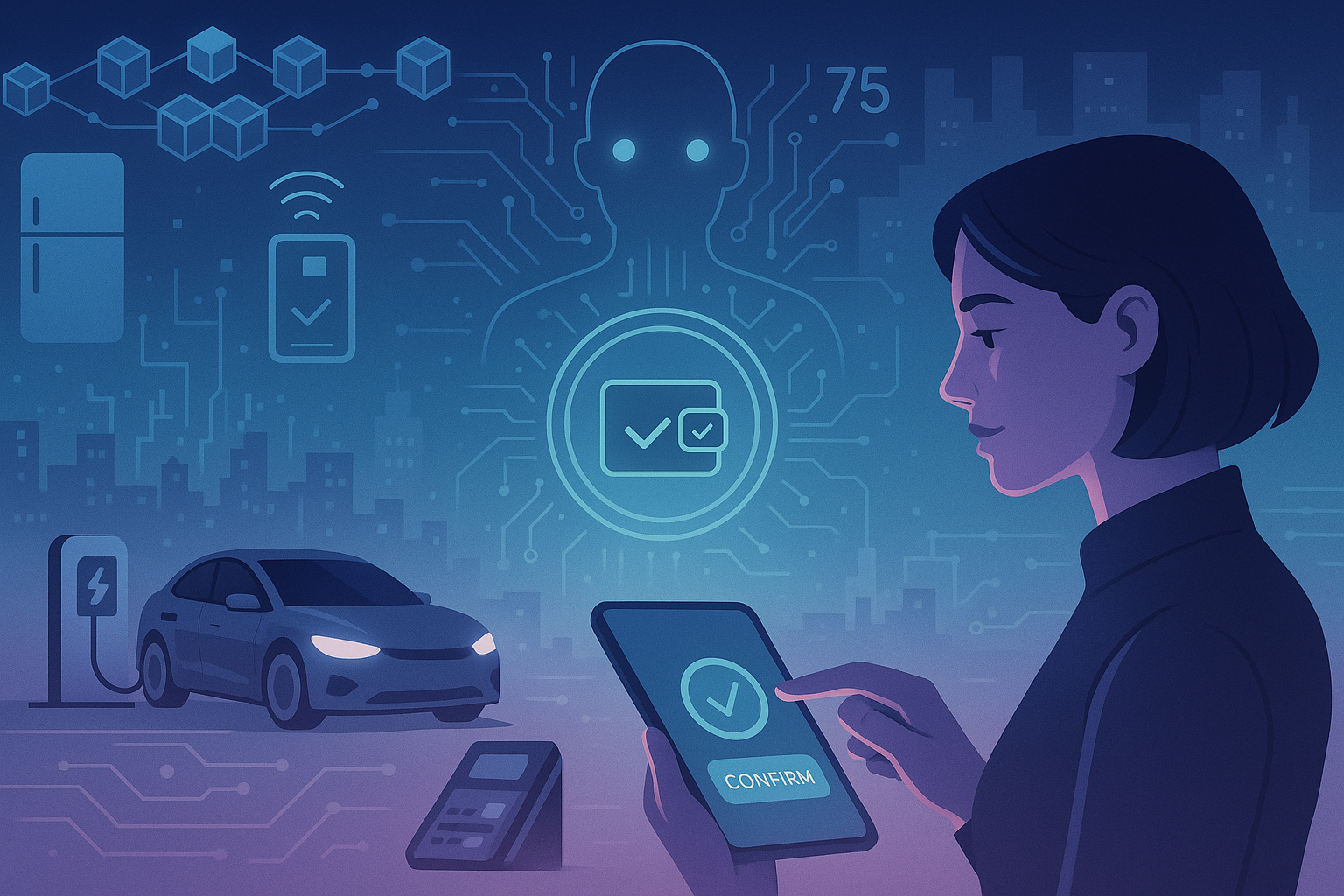
Keep our wallets. Click ‘Confirm.’ Watch the ledger shift.
Will it matter in 50 years?
Fast forward a few decades. It’s 2075. The bots have taken most of the jobs that we currently know today. AI writes your emails, does your taxes, even finds you your perfect match. You don’t really “use” the blockchain anymore, it’s just there. Like oxygen. Like chocolates.
Your car talks to a smart contract to pay your credit card balances. Your fridge negotiates electricity rates with the grid. Your AI assistant needs to prove it’s acting on your behalf, and not some random phishing AI army. So what does it do? It signs a transaction. It uses your wallet.
Protocols hum quietly in the background, like digital plumbing. They keep score. Keep time. Keep fairness. And nobody even calls it blockchain anymore because it’s just… the thing that works.
And you might not remember these good old days, or the hype around the airdrop that got you onboard the system. But you still click “Confirm” when it matters because that’s how you keep control and confirm a shared, global version of truth.
We may have started with meme coins and JPEGs. But if we’re lucky, we’ll end up as citizens in a bot-powered world, quietly protected by the most democratic thing we ever built: a shared record no one and nothing can mess with.
